The Little Farm With a Crockpot Germination Chamber
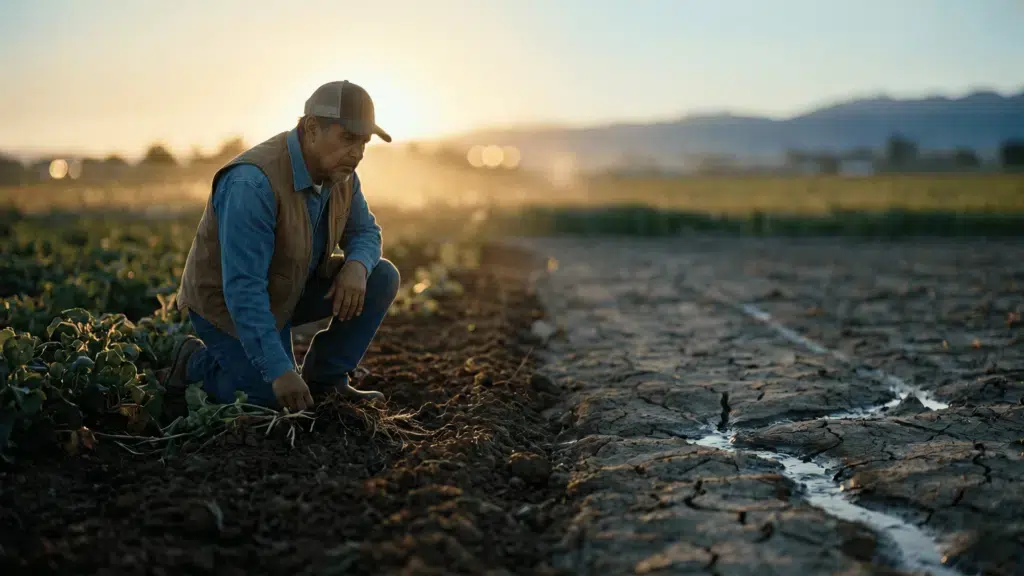
There is a certain kind of American place that does not announce itself loudly.
It sits off a road. It has a store, a greenhouse, a family moving between chores, and a quiet belief that the food system can still be repaired by human hands.
Farm on Central, in Carlisle, Ohio, is one of those places.
The farm was started by Michael and Savannah Kilpatrick during the pandemic, on a piece of land wrapped around an old brick house from 1897. It is not a giant operation. It is not trying to look like a polished food corporation. It feels more interesting than that. It feels like a working answer.
Inside one of the greenhouses, Michael shows where the farm begins: trays, soil, warmth, seeds. The germination chamber is not glamorous. Its secret engine is a crockpot, warming water and holding humidity so seeds can wake up without heating the whole greenhouse to tropical temperatures.

That is the charm of the place. Nothing feels wasteful. Everything feels figured out.
Michael talks about soil the way some people talk about family history. He pays attention to what is happening below the surface. Compost-based potting mix. Living roots. Beneficial insects. Earthworms. Rock dusts. Prebiotics. All the unseen life that makes seen life possible.
Farm on Central is doing something rural America has always done at its best: solving practical problems with local intelligence.
But this is not nostalgia. It is not a return to the past for the sake of the past. The Kilpatricks are building a modern local food system: a year-round farm market, online ordering, CSA options, U-pick berries, plants, garden supplies, and food from more than 45 vendors. It is part farm, part grocery, part classroom, part community anchor.
That matters.
Because small farms like this do more than grow food. They rebuild trust. They let people see who is producing what they eat. They make health less abstract. They make “local” mean a face, a field, a shelf, a berry, a child eating something that was alive in the soil not long ago.
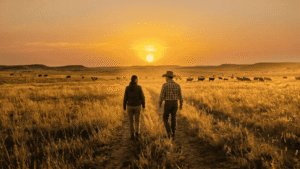
In the Farm Hero episode, Michael says one of the ways we can mitigate the toxic load around us is through really good, nutrient-dense food. That sentence could be the field note for the whole place.
Farm on Central is not asking people to understand every layer of regenerative agriculture before they shop. It is offering a simpler first step:
Come here. Meet the farmer. Taste the food. Notice the difference.
And maybe that is how a food movement grows. Not only through conferences or policy papers or big declarations, but through small rural places doing the work every day.
A greenhouse warmed by a crockpot.
A market full of local food.
A family farm betting that soil, health, and community still belong together.
That is the note from Carlisle.
Something good is growing here.
Related Reading
- The Farm on Central: Local Natural Farm Market in Dayton — Farm on Central
- Our Story: We Want to Grow Your Food — Farm on Central
- Farmshare: Your Weekly Local Food Box — Farm on Central
- Local and Regional Food Systems — USDA National Institute of Food and Agriculture
- Soil Health — USDA Natural Resources Conservation Service

Related Posts
After extreme drought forced the West Texas ranch to remove its cattle
 FARM PROFILE
Blue Heron Farm Turns High-Desert Constraints Into a Regenerative Agriculture Model
FARM PROFILE
Blue Heron Farm Turns High-Desert Constraints Into a Regenerative Agriculture Model
Farmer Rachel Kulchin was named the recipient of the second annual Good Farmer Award U.S.,