

At TomKat Ranch, regeneration is something people can walk through, question, taste, and carry home with them.
Why this matters
A lot of farms produce food. Far fewer are built to help people understand where food comes from, how land recovers, and what practical action looks like once that understanding sets in. TomKat Ranch in Pescadero, California was shaped for that larger purpose. Wendy Millet describes it as a place where a diverse team brings different strengths into one shared mission. Annie Fresquez calls it a living laboratory. Bella Newcomb brings the public into the picture by focusing on what happens after people feel connected to the land itself. Together, they show how a ranch can become more than a production site. It can become a place where learning turns into responsibility.
“At TomKat Ranch, we are a learning laboratory.”
A ranch built to teach
TomKat Ranch was founded around a mission to provide healthy food on working lands in a way that regenerates the planet and inspires action. That mission gives the place a different kind of public role. Wendy Millet talks about a team with varied skills and “superpowers,” which helps explain why the ranch functions as more than a cattle operation or event space. It hosts scientists, farmers, ranchers, legislators, food-system advocates, and community members. Annie Fresquez says visitors come to see science trials, grazing plans, and real-time experimentation. The goal is not to preserve the ranch as a static landscape. The goal is to use it, study it, and share what works.
That changes the texture of the experience for anyone who visits. Annie describes the difference clearly: people can enjoy a beautiful place in many settings, but TomKat is meant to offer more than scenery. The learning is tied to food, nutrients, land health, and practical action. People leave with something to apply, whether that means a new way of thinking about food systems, a different relationship to their own garden, or a better understanding of why land management matters in the first place.
The most useful lessons are visible
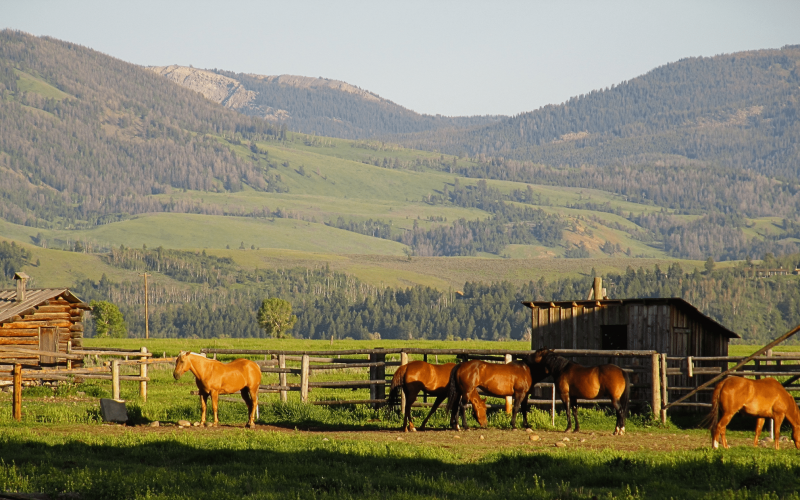
One reason TomKat works so well as a public-facing model is that the ideas are made visible. You can see cattle being moved and landscapes being read. You can hear people talk about carbon, water, and soil without the place turning into a classroom in the abstract sense. Dakota Glick speaks about how cattle fit the slopes, the forage, and the wet seasons. Bella Newcomb connects livestock to healthy soil and healthy soil to the food even non-meat eaters depend on. The ranch becomes a place where a bigger food-system argument is made tangible.
Several threads keep running through the work at TomKat:
- Working lands can also be places of public education
- Soil health connects food quality, water, and climate stability
- Cattle management affects more than beef production
- Visitors learn best when they can see systems in motion
- Connection to land often changes consumer behavior
That last point may be the most important. Bella says that even a short connection to the land can create a real impulse to protect it. That idea helps explain why TomKat matters beyond California. The ranch is showing that education does not have to stay trapped in reports, conferences, or policy language. It can happen through lived experience.
“When you come and you have a connection and a relationship with the land… you really feel that impetus to protect it and to get invested and to make hard choices about your food.”
Where food advocacy comes into focus
TomKat’s influence also reaches beyond the ranch gate. Kathy Webster extends the story into schools and food advocacy, describing work with a local district to move away from cans and frozen food and toward scratch cooking. That matters because it shows how the ranch’s values travel into institutions. A living laboratory becomes more than a demonstration site when it helps shift what children actually eat. The point is not to keep good ideas contained on one property. The point is to move them into public life.
That same logic shapes the consumer side of the story. Bella talks about thanking the farmer and the rancher, about remembering the soil beneath the meal, and about making choices that carry global consequences. TomKat does not ask people to admire regeneration from a distance. It asks them to see their place inside it.
What the future of food needs more of
TomKat Ranch offers a strong answer to a question the food world keeps circling: how do people move from awareness to action? One answer is to build places where the systems behind food can be seen clearly and felt directly. Wendy Millet’s team approach, Annie Fresquez’s public education work, Bella Newcomb’s consumer lens, and Kathy Webster’s institutional bridge all point in the same direction. The future of food will need farms and ranches that produce, certainly. It will also need places that teach, connect, and persuade through lived experience. TomKat shows what that can look like when regeneration is made public.