At Mimms Ranch, a Drought Reset Tests Regenerative Grazing in the Chihuahuan Desert
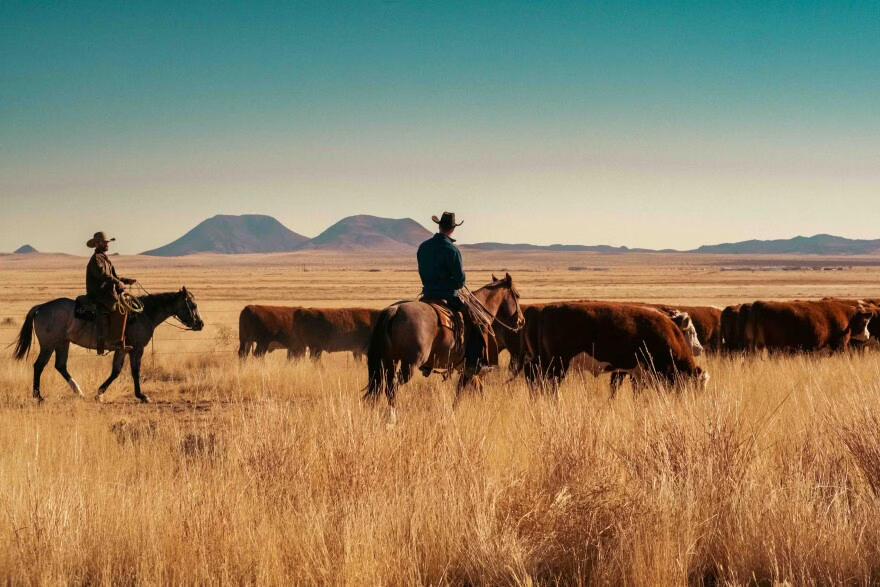
Image: Cowboys drive steers across the Mimms Unit near Marfa, Texas. Photograph by Rowdy Dugan. Source: Marfa Public Radio.
After extreme drought forced the West Texas ranch to remove its cattle, a year of rest and a new seasonal grazing model are opening the next chapter in a long-running regenerative agriculture experiment.
MARFA, Texas — At the northwest edge of Marfa, the Dixon Water Foundation’s Mimms Unit stretches across 16,000 acres of high-desert grassland. The working ranch is also a research and demonstration site, built around a question with growing importance across the arid West: Can livestock production help maintain native grasslands when rainfall becomes increasingly unpredictable?
That question became immediate in 2024. Mimms received only about 3 inches of rain, according to the foundation’s 2025 annual report. Managers fully destocked the ranch that fall, leaving the land without cattle for more than a year.
By the end of 2025, rainfall had improved. The ranch recorded an average of 11.49 inches across three rain gauges, and cattle returned under a different operating model. Rather than rebuilding its former year-round cow-calf herd immediately, Mimms entered a custom-grazing agreement with a local rancher to develop heifers on the property from November 2025 through May 2026.
The change reflects the ranch’s broader approach: adjust livestock numbers and timing to the forage the land can actually support, rather than holding the stocking plan constant through drought.
A Ranch Designed for Comparison
The foundation acquired approximately 11,000 acres at Mimms in 2008 and added the neighboring 5,000-acre George Ranch in 2019. The property lies between roughly 4,724 and 4,944 feet in elevation, where Chihuahuan Desert grassland supports cattle, pronghorn, quail and migratory grassland birds.
Mimms was developed to compare different ways of managing livestock on the same landscape. Its long-running research design includes small areas where livestock are excluded, a large continuously grazed pasture and thousands of acres divided into smaller paddocks used for rotational or adaptive multi-paddock grazing.
In the rotational system, cattle are concentrated in one area for a relatively short period and then moved, allowing grazed plants time to recover before livestock return. The timing of those moves and the length of recovery are adjusted according to rainfall, plant growth and available forage.
A U.S. Fish and Wildlife Service case study of Mimms notes that the practice is intended to mimic some of the movement and disturbance patterns once created by large wild herbivores. It also emphasizes that stocking density and recovery periods must be adapted to local conditions, particularly in the dry Chihuahuan Desert.

Pictured: Dixon Water Foundation President Casey Wade and Farm Hero host Laura Zaspel
When Drought Changes the Plan
The 2024 destocking was not a departure from regenerative management. It was an application of it.
Keeping cattle on drought-stressed pasture can reduce plant cover, expose more soil and limit the ability of perennial grasses to recover when rain returns. At Mimms, removing the herd gave plants a longer recovery period while managers reassessed the amount and type of livestock the ranch could support.
We spoke with Casey Wade, now president and CEO of the Dixon Water Foundation, who described the stakes of managing desert grassland this way.
“Even though these systems look really harsh and tough, they’re really very delicate. If you mess up in a desert climate, it doesn’t forgive.”
The seasonal heifer arrangement gives Mimms more flexibility than a permanent breeding herd. Livestock can arrive when forage is available and leave before the driest part of the year, reducing the pressure to maintain the same number of animals through changing conditions.
The transition follows 15 years of monitoring and side-by-side grazing comparisons. In 2025, the Texas Section Society for Range Management recognized Mimms with its Outstanding Rangeland Management Award.
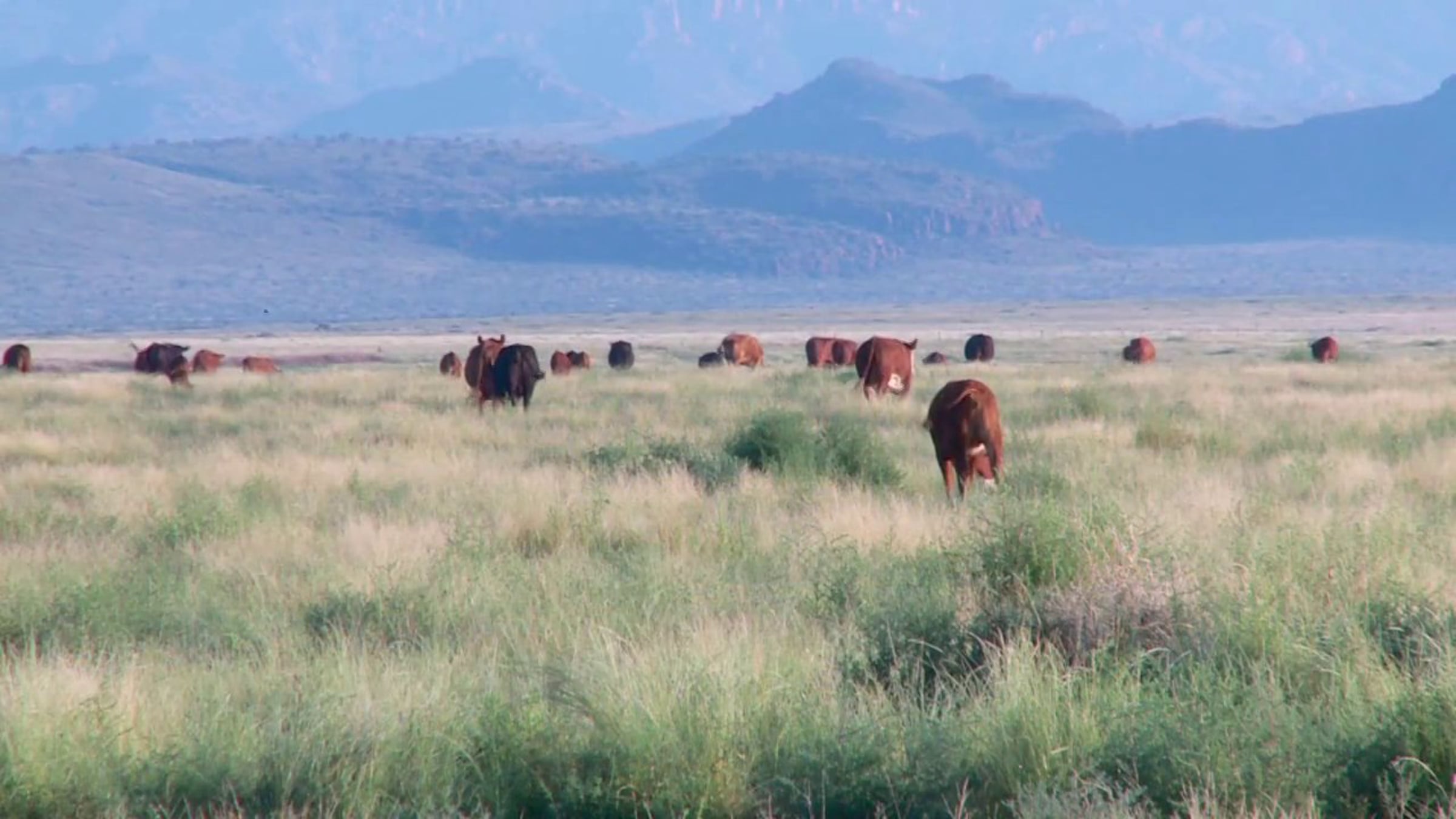
Image: Cattle grazing at the Mimms Unit in West Texas. Source: Out On The Land/Vimeo.
What the Monitoring Shows
Long-term monitoring at Mimms has documented meaningful differences among its grazing treatments, although the results also show why regenerative grazing cannot be reduced to a single formula.
The foundation’s summary of grazing and wildlife research reports that monitoring conducted from 2010 through 2021 found an average of 18% bare ground in rotationally grazed pastures, compared with 39% in the continuously grazed pasture. Less bare ground can help slow runoff, limit erosion and create more space for grasses and other plants.
The foundation’s 2025 monitoring found that bare ground increased following the severe 2024 drought and then began to decline again as rainfall and plant growth recovered. Across the full monitoring period, the reported long-term trend at Mimms is toward decreasing bare ground.
Wildlife-forage studies have produced more variable results. During the dry conditions of 2018, areas without cattle produced the greatest quantity and nutritional quality of forbs used by pronghorn. In 2019, following different growing conditions, rotationally grazed pastures produced the strongest results. The continuously grazed pasture ranked lowest in both years.
Those findings do not identify one treatment as universally best. They show that rainfall, recovery time, livestock pressure and the needs of individual wildlife species interact from year to year. At Mimms, monitoring is used to revise management rather than confirm that the same grazing schedule will work under every condition.
Wildlife Is Part of the Operating Picture
Mimms sits within habitat used by pronghorn, Burrowing Owls, Cassin’s Sparrows, Scaled Quail and other grassland species. The ranch has hosted research into how grazing patterns affect the plants, insects and habitat structures those animals depend on.
Studies summarized by the foundation found greater abundance and diversity of migratory grassland birds in rotationally managed pastures than in the continuously grazed comparison area. Research on Scaled Quail also identified more diverse food resources and habitat conditions in rotational pastures.
The ranch’s cattle operation has received Audubon Certified bird-friendly land status, connecting the beef produced on the property with standards intended to maintain native grassland habitat.
Researchers continue to examine outcomes rather than assuming livestock presence alone is beneficial. Grazing can create a mix of plant heights and open ground that some wildlife species use, but excessive or poorly timed grazing can remove cover and food. Mimms’ comparisons are designed to measure where that balance changes.
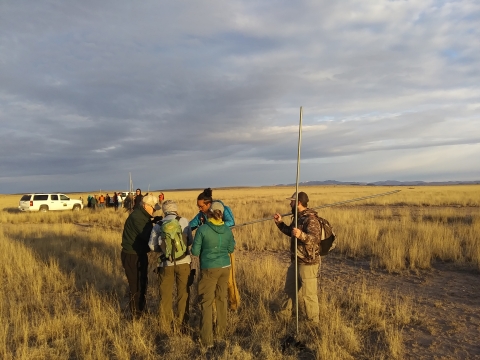
Image: Researchers and volunteers prepare for desert grassland bird fieldwork at Mimms Ranch in 2019. Photograph by Phillip Boyd/Dixon Water Foundation. Source: U.S. Fish and Wildlife Service.
A Working-Land Test, Not a Finished Formula
Mimms is not being managed as a preserved landscape without agricultural production. It remains a working ranch intended to produce food while keeping native grassland functioning for plants, wildlife and water.
That distinction matters in the Chihuahuan Desert, where much of the land is not suited to crop production without extensive irrigation and soil disturbance. Grazing animals can convert native forage into food without plowing the grassland, but only when livestock demand remains within what the landscape can regenerate.
The ranch’s latest transition will provide another test. Its seasonal grazing model offers greater flexibility after drought, but its results will depend on rainfall, forage recovery, animal performance and the timing of future grazing decisions.
Mimms entered 2026 with cattle back on the land, improving ground cover and a management system altered by what the drought revealed. The next set of monitoring results will show how well that reset holds through another West Texas growing season.
Related Resources

Related Posts
 FARM PROFILE
Blue Heron Farm Turns High-Desert Constraints Into a Regenerative Agriculture Model
FARM PROFILE
Blue Heron Farm Turns High-Desert Constraints Into a Regenerative Agriculture Model
Farmer Rachel Kulchin was named the recipient of the second annual Good Farmer Award U.S.,
At White Oak Pastures, regeneration is not just a grazing method. It is a business model. In Bluffton, Georgia, the…