Why Wildfires Start Long Before the Spark
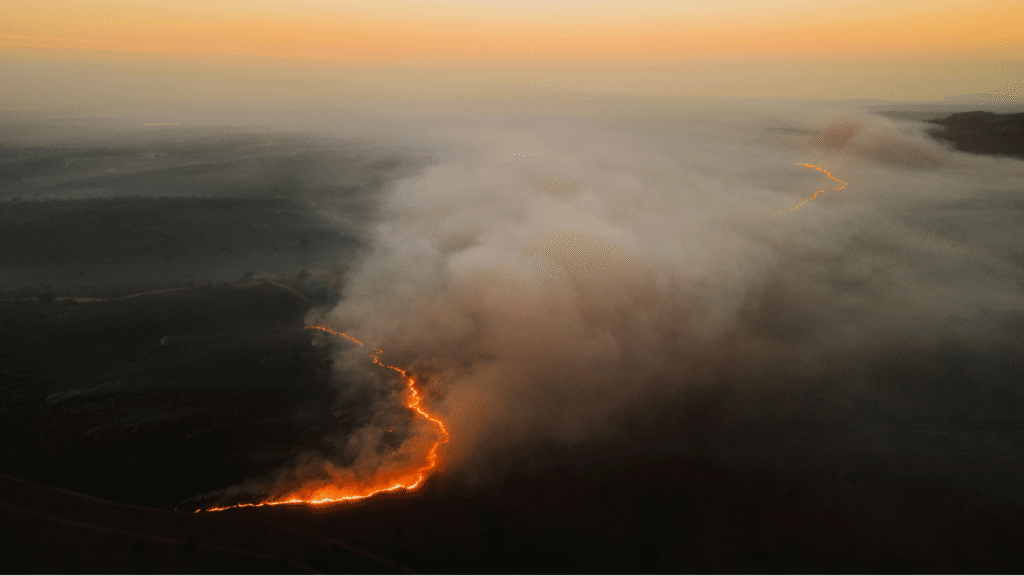
Wildfire usually enters the public conversation after the damage is already visible. A town is burning, smoke is moving through the air, and the search for a cause begins.
Mark Biaggi starts much earlier.
As the ranch manager at TomKat Ranch, he frames the issue through the condition of the land itself. He talks first about soil health, then about carbon moving through plants and microorganisms, and then about the larger cycles that hold a landscape together. That sequence matters. It places fire inside a living system rather than treating it as a separate event.
“Actually a focus on soil health. The cattle are just one of our tools.”
For Biaggi, the keyword is “cycling.” Carbon moves through plants, sugars, roots, microorganisms, dead matter, and ground cover. When that exchange is active, the land functions. When a piece is removed, the balance weakens. Fire enters that same framework. A landscape with broken cycles behaves differently under stress. Dryness lingers. Fuel accumulates. The land loses some of its capacity to regulate itself. By the time flames arrive, the conditions have already been building for years.
Soil Health Leads the Conversation
Biaggi is clear about where he places his attention. He says his focus is on soil health and that cattle are one of the tools used on the land. That reveals the order of priorities. Land comes first. Management decisions follow from that. Livestock belong in the picture because of what they can do in relation to the landscape, not because they are the whole story.
That way of thinking pulls wildfire into a broader ecological frame. Biaggi describes a country that has built up too much fuel and grown drier through land and water mismanagement. He points to interrupted natural cycles and to the long habit of preventing slow-burning natural fire without replacing its ecological function. The result is a landscape carrying more dry material than it once did, with less moisture in the places that used to stay wet. Fire under those conditions behaves with a different level of force.
Animals Have a Job to Do on the Land
Biaggi’s explanation becomes especially vivid when he talks about cows and goats. He gives wildfire prevention a practical shape:
- Cows reduce forage height, which can lower the height and intensity of a flame.
- Goats work on brush and lower growth beneath trees, helping remove the vegetation that allows fire to climb.
- “Ladder fuels” matter because they let fire move from grass into the canopy.
- Once fire reaches the tops of trees, the danger rises sharply.
- Managed grazing becomes part of fire prevention, not just a separate agricultural practice.
He does not pretend grazing is the only answer. He mentions prescribed burns and mechanical work as part of the toolkit. He also calls mastication an emergency measure because the material grows back when nothing else changes. That comment gets to the heart of his argument. A machine can buy time. It cannot restore function by itself.
The deeper work involves fuel management and water management together. Biaggi even reaches back to the role of beavers and wet riparian corridors, pointing to places where fire slows down or goes out when water is held in the land the way it once was.
The Public Is Already Part of This Story
One of the strongest parts of Biaggi’s argument is how directly he connects ranch management to daily life off the ranch. He does not describe wildfire as a rural problem with rural consequences. He says that when these lands burn, people in cities breathe the smoke.
When water leaves the land dirty, people downstream drink it. The stakes widen immediately. Fire prevention becomes part of public health, water quality, and the way communities live with the outcomes of agricultural and land-use decisions.
That same logic shapes the way he talks about shopping. Biaggi says the buying power sits with the 97 to 98 percent of people who do not work in agriculture. He wants consumers to understand that their purchases do more than fill a refrigerator.
Supporting regenerative producers helps support fire management, carbon cycling, nutrient cycling, and healthier food. He ties food quality back to the pasture itself, noting that healthier soil and more diverse forage show up in the nutrient density of both plants and meat. Seen through that lens, consumer demand becomes a land-management force.
The Future of Fire Prevention Is Land Stewardship
Biaggi’s view points toward a future where fire prevention begins with land that holds water better, carries less dangerous fuel, and operates through active ecological relationships. It begins with managers who understand that soil, water, animals, and vegetation belong to the same conversation. It also depends on a public willing to see its own place in that system.
That is the opportunity inside his argument. More resilient landscapes can be built through better grazing, better fuel management, healthier riparian areas, and a stronger respect for ecosystem processes. Food can become part of that shift rather than a separate category. Fire policy can move closer to land stewardship. Consumer decisions can reinforce the work already happening on the ground. The spark may be sudden. The future of prevention will be shaped much earlier, in the way land is cared for season after season.
Related Resources
- Targeted Grazing for Wildfire Fuel Breaks — USDA Climate Hubs
- Goats as a Tool for Fire Management — U.S. Fish and Wildlife Service
- Fuels — U.S. Forest Service Research and Development
- Firefighting Beavers — U.S. Forest Service
- Wildland Fire Research: Human Health — U.S. Environmental Protection Agency
- Water Quality After Wildfire — U.S. Geological Survey

Related Posts

Most people meet food at the end of the process. They see it on a shelf, in a market bin,…