White Rock Conservancy
Garst family land steward, White Rock Conservancy advocate, and defender of soil health and resilient farming. Multi-generational Iowa agricultural history shaped by restoration and no-till innovation
In Iowa, where some of the richest farmland in the world can also be the easiest to destroy, Liz Garst stands for a harder standard: agriculture that protects soil, respects history, and treats stewardship as a responsibility to the future.
Coon Rapids, Iowa
Garst family stewardship within White Rock Conservancy’s working landscape
Garst family land steward
Soil health, cover crops, erosion prevention, and resilient land management
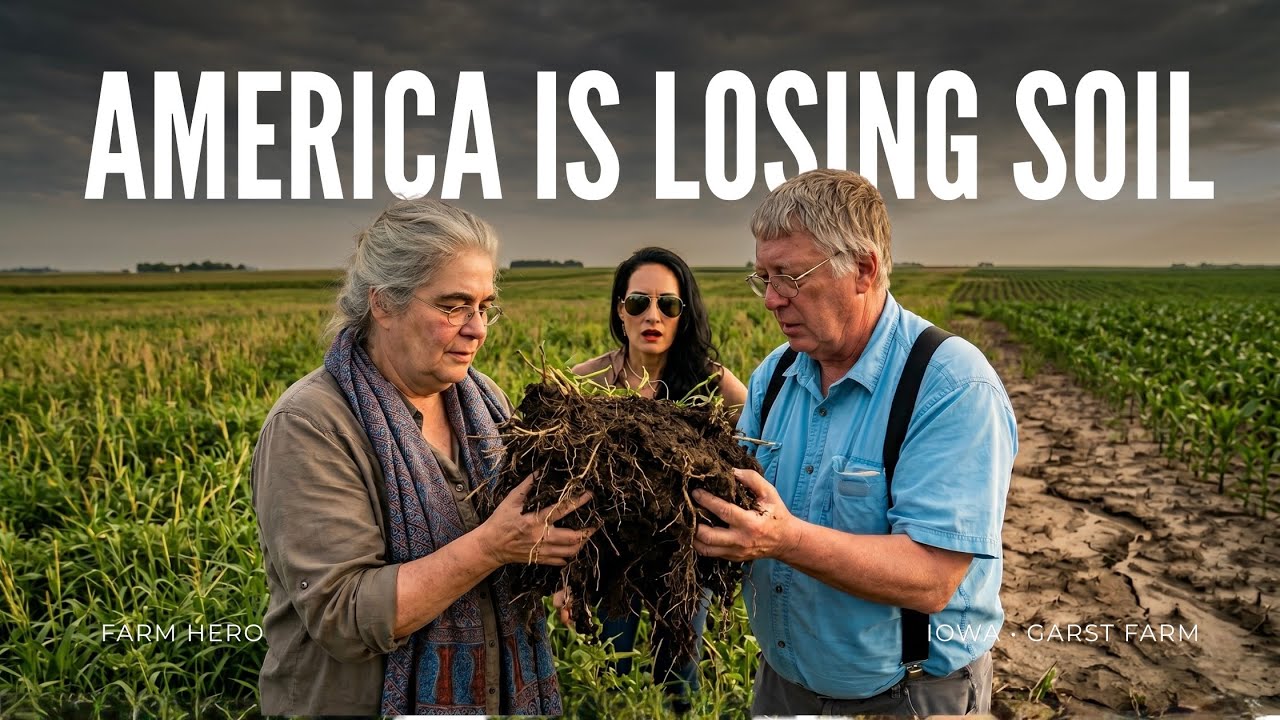
Coon Rapids, Iowa
Her grandfather lived through the consequences of land destruction, bought worn-out farmland scarred by erosion, and became known for pioneering no-till practices and land restoration for habitat. Liz carries that inheritance forward as a duty. She is devoted to soil health because she believes the future depends on it.
That urgency sharpens when she describes what is happening across the Midwest. She speaks plainly about topsoil loss, heavier rainfall, the damage caused by leaving the ground bare, and the failure to feed the living biology in the soil for much of the year. Her message is not abstract. Soil is not a concept here. It is the foundation of food, water, resilience, and the future of farming itself.
Liz Garst’s story does not romanticize farming, and it does not flatten stewardship into a slogan. Instead, it asks one of the hardest questions in American agriculture: how do you protect the natural resources that farming depends on while still making the land productive?
She matters because she connects today’s soil crisis to land that has already been lost, landscapes that have already failed, and a future that could be far more fragile if nothing changes. Her perspective makes the stakes bigger than one season or one field.
“We have chosen morals over revenue, at least to this degree.”
Farm Hero chose Liz Garst because she embodies a truth at the center of the series: the future of food depends on people willing to think beyond yield alone and manage land as if it must still be alive a hundred years from now.
Featured Episode

In Iowa, Liz Garst explores what happens when one of the world’s most productive agricultural regions begins losing the very soil it depends on. Through family history, land stewardship, and the realities of erosion, cover crops, and resilience, the episode asks what it really means to farm with the future in mind.
Get the latest posts delivered to your inbox.